• home
    • about the moon + stone
    • who i am
    • angelica
    • path to here
    • pricing + value
    • training
    • testimonials
    • 1-on-1 offerings
    • how to choose an offering
    • what to expect
    • book an appointment
    • monthly membership
    • Members Only
    • centered podcast
    • policies
    • free lower world journey
    • boring stuff
  • blog
    • events
    • the Complete Tarot
    • Cycles
    • Healing Retreats
    • Holding Space + Ethics
    • Mentoring Circle History
    • Reiki
    • gift ideas
    • animal medicine
    • artwork
    • books
    • classes, workshops + events
    • crystals
    • gift certificates
    • handcrafted medicine
    • Jewelry
    • Membership
    • new products
    • the Moon + Stone Healing Zazzle Shop
    • recorded healing + tarot Sessions
    • recorded shamanic journeys
    • spellwork
    • tarot decks, tools + supplies
    • talisman + amulets
    • contact
    • subscribe
  • Sign In My Account
Menu

the moon + stone healing

4814 Jonestown Road, Lower Level
Harrisburg, PA 17109
717.770.9109
tarot, earth medicine + wisdom

Your Custom Text Here

the moon + stone healing

  • home
  • who i am
    • about the moon + stone
    • who i am
    • angelica
    • path to here
    • pricing + value
    • training
    • testimonials
  • offerings
    • 1-on-1 offerings
    • how to choose an offering
    • what to expect
    • book an appointment
    • monthly membership
    • Members Only
    • centered podcast
    • policies
    • free lower world journey
    • boring stuff
  • blog
  • events/classes
    • events
    • the Complete Tarot
    • Cycles
    • Healing Retreats
    • Holding Space + Ethics
    • Mentoring Circle History
    • Reiki
  • shop
    • gift ideas
    • animal medicine
    • artwork
    • books
    • classes, workshops + events
    • crystals
    • gift certificates
    • handcrafted medicine
    • Jewelry
    • Membership
    • new products
    • the Moon + Stone Healing Zazzle Shop
    • recorded healing + tarot Sessions
    • recorded shamanic journeys
    • spellwork
    • tarot decks, tools + supplies
    • talisman + amulets
  • contact
    • contact
    • subscribe
  • Sign In My Account

Earth Medicine for May

May 25, 2025 Angie Yingst

Our medicine of the month is about Drinking up life and we go on that journey with Hummingbird. Beltane’s journey on May 1st was led with three separate pollinators, and I think the message carries all month that we take in joy, nourishment, kindness, love, when we find it, and by doing that, seeking each moment of joy, we spread light, and remember when we spread light to one person, it pollinates them, and they can bloom. But it starts with us nourishing ourselves. As I said in the membership group, do no harm, but take no shit…this is the work on now. Hold boundaries but still be sweet.

HUMMINGBIRD
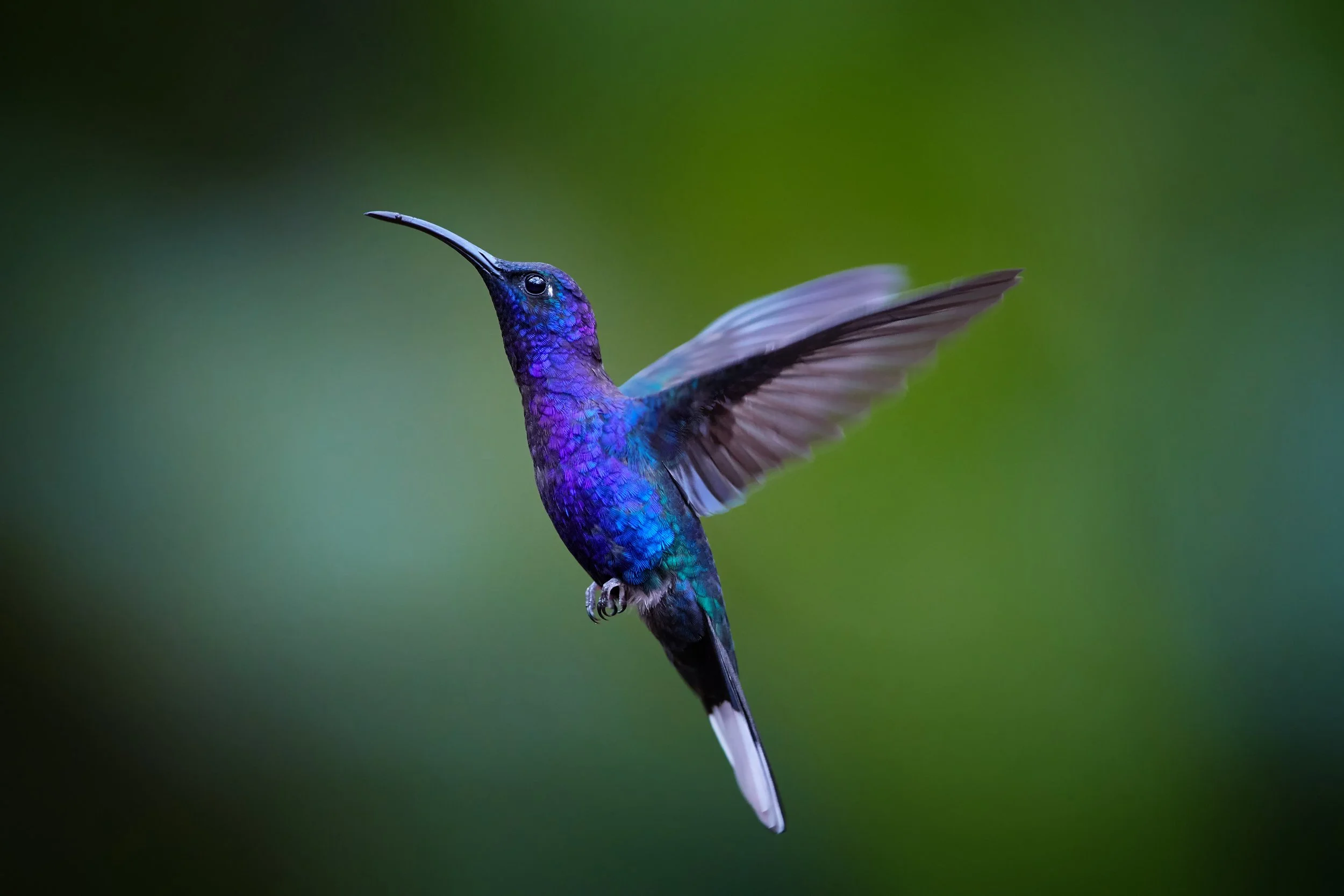
Let’s talk about hummingbird medicine. There are over 300 species of Hummingbird, and they are only found in the Americas.

Though she be tiny, the Hummingbird has much medicine to share with us. Hummingbird has an incredible memory, remembering every flower she visits and the intricate routes to return to them. She also knows just how long to wait for a flower to generate more nectar, so it can return to feed. Hummingbirds also recognize humans and knows who refills bird feeders and who doesn’t.

This is essential for their survival, as their constantly humming wings never stop, making their wisdom one of constant motion and quickness. Because they never stop flapping their wings, they need to eat every ten minutes, with a fast metabolism. Hummingbird brings a joyous energy to their environment, bearing light in their iridescent wings and energy.

Hummingbird travels more than 2000 miles in a single migration, beating its wings up to 5400 times per minutes so travel at speeds of 33 mph. But they don’t fly only in one direction. Hummingbird are extremely adaptable because they can hover, fly up, down, backwards and forwards…making them a beautiful ally of those who tap into the multidimensional universe. Hummingbird is seen as the medicine of the present, of joy, of playfulness, of happiness, of action, and of endurance. They are the bringers of light and the sacred.

Because Hummingbird is native to the Americas, but most specifically to South America, you find many legends of Hummingbird through the Aztec, Maya, and Inca. Mayan legends explain that the reason Hummingbird is so tiny is because it was created out of the scraps of feathers left over when other flying creatures were made. In both Mayan and Incan traditions, Hummingbird is the representative of the North and the ability to guide us to our ancestors. Hummingbird is known to accompany shamans to the Three Worlds, Upper, Middle and Lower, during the journeying process and also regarded as a psychopomp, or one who guides souls to the afterlife. Hummingbird is also a retriever of lost souls because it can fly quickly into small spaces and bring back the soul undetected. In many traditions, Hummingbird carried the prayers to the Gods, whispering on the wind the requests and gratitude of the shaman, and teaching the people to “drink deeply from the nectar of life”.

In some Peruvian shamanic traditions, the Royal Hummingbird is known as Siwar Q’enti in the Quechua language, the language of the Incan Empire. Hummingbird is one of the most important archetypal creatures, known for its ability to fly in many directions:  up, down, backward, forward, and also to stay hovering in place.  Maybe for that reason, Siwar Q’enti is also invoked during the calling in of the North direction during some shamanic opening ceremonies, “whispering to us in the winds” and “teaching us to drink deeply from the nectar of life.”

Don Oscar Miro-Quesada says “Hummingbird medicine takes our nectar and cross pollinates us with the universe so that we are always connected to the great web of life. When we call forth the energies of Royal Hummingbird, we open to a profound relationship that gives us the ability to weave the beauty, peace and lightness of the heavenly realm into our everyday for a greater sense of love, gentleness and service in our lives.”  This tiny iridescent bird packs a huge amount of energy, darting tirelessly from flower to flower in search of nectar. She is full of life, energy, and bravery.  Hummingbirds can teach us how to use flowers for healing and work with plant medicine. She also helps us relearn how to honor our body and reembody our body after trauma or illness. She is a symbol of healing and abundance.

Interested in working with hummingbird a little more intensely? Take this guided shamanic journey with hummingbird.
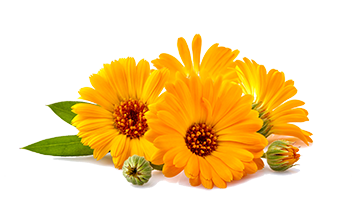
Calendula

Our plant ally this month is Calendula, a sunshiney bloom with ancient roots and modern magic. Officially known as Calendula officinalis, she’s not the same as the marigolds in your flower beds, even though folks often mix them up. Calendula is her own medicine—an herb of healing, protection, and joy. She’s been a companion in my practice for years, especially when my skin or spirit needs a little extra love.

Calendula is beloved in herbalism for a reason. She’s anti-inflammatory, soothing, and gently powerful—used traditionally to heal wounds, ease eczema, calm sunburn, and bring balance to irritated or inflamed skin. Even her slightly bitter taste carries that signature plant wisdom, that grounding earth medicine. And yes, she works just as beautifully in tea, oils, tinctures, and spiritual baths.

One of my favorite ways to work with her? A bano—a ritual bath. I boil water with intention, prayers, maybe a little song, and dissolve Dead Sea salt and Epsom salt into it. Then I turn off the heat and add calendula petals (and sometimes other herbs, depending on the moment). Let it steep like tea for the soul. Once it cools, I strain it through cheesecloth and pour it over my head in the shower—or soak in it if I don’t mind the cool water. That temperature drop shocks the aura just enough to shake off the dust of the day and realign your field. It’s like a reset button. Calendula is especially beautiful for this kind of energy work. She helps clear, soothe, and bless.
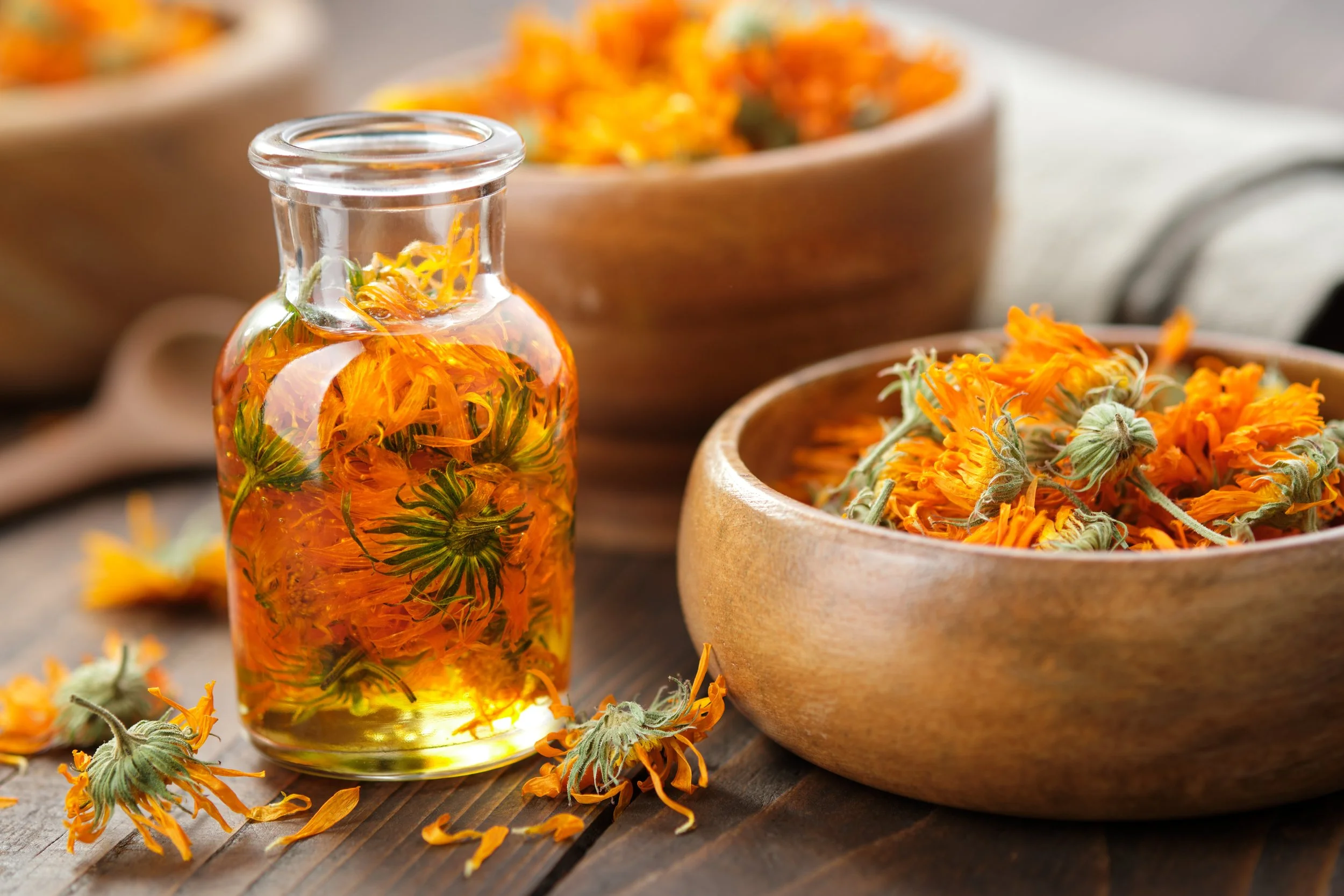
Beyond the body, Calendula is pure solar magic. She’s tied to the sun and the element of fire but holds a gentler flame—one that heals instead of scorches. In witchcraft and folk magic, she’s long been used to ward off negativity and invite in love, luck, and protection. Hanging dried calendula above your door is an old tradition for keeping unwanted energy out. Her petals can be scattered in ritual circles, tucked into dream pillows, or used in spellwork for justice, healing, and clarity.

Calendula has that kind of “speak truth with warmth” energy. She teaches us to rise up like the sun and still remain soft. She’s about abundance—not just in finances (though yes, she’s a great ally for money magic and job success), but in attitude. In beauty. In resilience. If she’s blooming in your life, there’s a message there: keep creating the environment where joy can grow.

And if you want to grow her? Calendula is easy. She thrives in compost-rich soil and full sun but doesn’t like intense heat. She reseeds herself if you let her, which is the most Calendula thing ever—always showing up again, ready to heal, ready to brighten. Just keep deadheading the spent flowers to prolong her bloom time. The sticky resin at the base of the flower heads is part of her medicine, so don’t be afraid to get your fingers a little tacky.

You can eat her too—those golden petals can be sprinkled in salads, stirred into eggs, frozen into herbal ice cubes, or steeped into teas and butters. I remember once, in the deep heart of winter, an herbalist friend brought me a quiche speckled with calendula petals. It felt like sunshine on a fork.

Calendula reminds us that beauty is medicine. That healing can be soft. That even in hard seasons, we can bloom.

Emerald
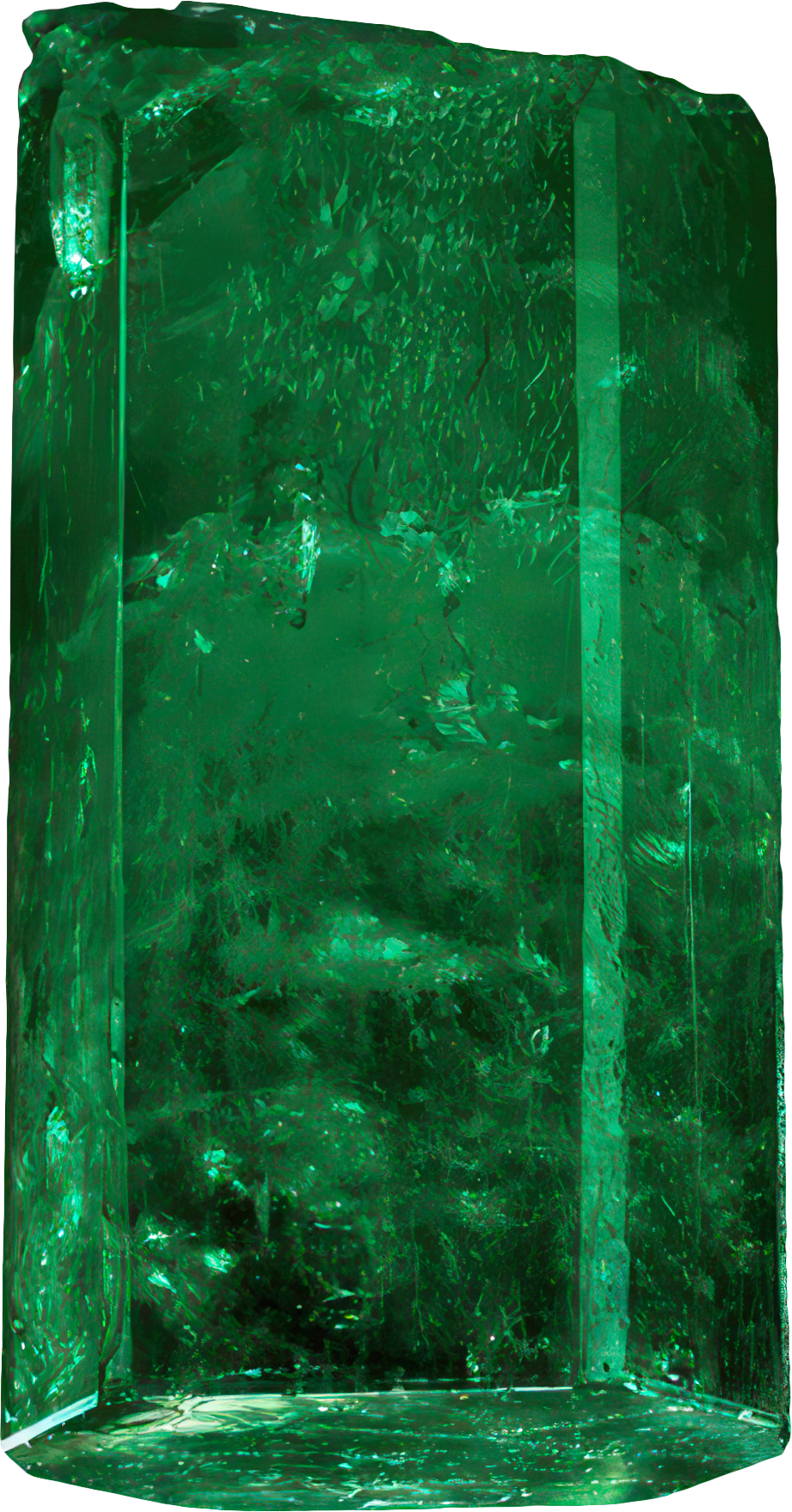
So, what’s the deal with Emeralds? I mean, aside from being absolutely gorgeous, they’re packed with history, healing, and symbolism. St. Hildegard of Bingen (a badass medieval mystic who loved her crystals) once said, “All the green of nature is concentrated within the Emerald.” And honestly? That’s exactly how it feels when you hold one.

Emerald is a variety of Beryl (yes, the same mineral family that gives us Aquamarine and Morganite), and it’s been adored for literally thousands of years—like, it was sold in Babylon as early as 4000 BCE. Cleopatra was obsessed with it. The Incas worshipped it. The name even comes from a Sanskrit word that basically means “the green of growing things.” How poetic is that?

Known as the “Stone of Successful Love,” Emerald is all about heart energy. It opens up the Heart Chakra, bringing in love, compassion, and a little bit of domestic bliss. Whether you’re looking to deepen your relationships, attract a soulmate, or just feel more connected, Emerald’s got you.

But it’s not just a love stone. It’s also incredible for intuition and insight—especially anything connected to vision, both literal and metaphorical. People have long believed Emerald could sharpen the mind, enhance psychic abilities, and even help you see the future. It’s associated with wisdom, clarity, memory, and discernment. Basically, it’s the go-to if you need your heart and your head working together.

On the physical side, Emerald’s thought to be a rejuvenator. It's said to help with everything from eyesight and sinuses to the heart, liver, and spine. Some traditions even say it can aid fertility and recovery from illness. It’s that whole green, life-giving vibe—it just wants everything to grow and heal.

In terms of emotions, Emerald is like a soft hug for your soul. It’s said to soothe heartbreak, lift heavy energy, and help clear away old wounds—especially those that left you feeling powerless. It encourages you to live from your heart with trust, hope, and compassion—not just for others, but for yourself, too.

Spiritually, it connects you to Divine Love and abundance—not just money (though, yes please), but a kind of holistic, soul-deep abundance. It reminds you that there is always enough, and that the universe wants to support your joy.

Whether you’re wearing it, meditating with it, or placing it on your altar, Emerald helps bring balance, beauty, and emotional harmony. And hey, if you’ve got something creative or visionary you’re working on, this stone will happily sit by your side, cheering you on with ancient wisdom and good vibes.

In earth medicine Tags earth medicine, hummingbird, emerald, calendula, plant medicine, animal medicine, stone medicine
Comment

Violet

February 23, 2025 Angie Yingst

There is nothing like walking into my yard on a Spring afternoon to violets covering the yard, peeking through the growing green grass. It fills me with so much pleasure to see the early blooms which we do sometimes get as early as March, but more often in April. It gives me hope that the cold, gray weather is coming to an end.

The Common Blue Violet (Viola sororia) is native to central and eastern North America. These little beauties begin sprouting up in lawns, along the roadside, within sidewalk cracks, and beside forest paths in late March/Early April. There is a variation (cultivar) that is white with purple streaks that will grow alongside the typical purple/blue. And the leaves and blossoms of the Common Blue Violet are edible.

Identification

There are many species of violet. In addition to Viola sororia, there is Viola oderata, (Sweet Violets). You can identify these by their light sweet scent. However, it is most likely the flowers growing in your yard are the Common Blue variety. But whether you are foraging from your yard or at another location, it is always good to know how to identify the plant so you are 100% sure before you use them.

Common Blue Violets have a basal rosette (a crown of leaves radiating from a stem) of toothed, heart-shaped leaves, and drooping flowers with five petals that do not produce seeds. The blossoms are blue, purple, and white.

There is a yellow variety that some people might come across when foraging. It is important to note that Common Violet does have a look-alike that is poisonous. Ficaria verna, also known as lesser Celandine or Pilewort. While the yellow flower of this plant looks different from the yellow violet, the basal leaves are very similar. So, if you are foraging and you come across leaves you believe are violets, wait until the flowers bloom to be certain of their identification.

These wildflowers are often called “weeds” but to me, they are wonderful forageable medicine. Violets have a wide variety of uses as food, medicine, and magick.

According to Greek mythology, the god Zeus fell in love with a priestess named Io. This wasn’t the first time for the philandering Zeus, so when his wife Hera found out, she was understandably miffed. To keep Io out of his wife’s way, Zeus turned her into a white heifer. When Io-the-heifer complained that she had nothing to eat, he created a field of violets for her—and while he was at it, he probably sent a bunch of violets to Hera, as an apology. The flowers soothed the jealous goddess, so the Greeks began using them to calm anger and induce sleep.

In the Middle Ages, Hildegard von Bingen used violet juice as the basis for a cancer salve. In the sixteenth century, violets were widely used to treat insomnia, epilepsy, pleurisy, and rheumatism. A couple of hundred years later, Nicholas Culpeper wrote that the plant was ruled by the planet Venus. This made it a natural as a treatment for throat ailments, since Venus also ruled the throat. They are, he said, “a fine, pleasing plant of Venus.”

In fact, violet leaves and stems do contain a soothing mucilage, as well as salicylic acid, the precursor of aspirin. They’re also rich in vitamins A and C, and for people who didn’t have access to fresh veggies in the winter, an early spring salad of violet leaves was a very good idea. The flowers themselves taste sweet, and they’re often made into syrup or even marmalade. You may have seen them in popular cookbooks, candied or crystalized and used to decorate pastries or cakes.

Violets have been associated with many magical properties, including protection, love, and fertility. They have also been used in aromatherapy and as a remedy for various ailments.

Protection

  • Violets are thought to keep evil spirits away and protect against nightmares.

  • African violets are believed to bring good fortune and create a harmonious atmosphere.

  • In medieval times, violets were grown in monastery gardens to protect against evil.

Love and fertility

  • In ancient Greece, violets were a symbol of love and fertility.

  • They were used in love potions and to make violet-flavored wine.

Aromatherapy

  • Violet oil can be used as an anointing oil for magical workings.

  • It can also be used to treat skin conditions like acne, eczema, and dermatitis.

  • Violet oil can also be used to stimulate circulation and aid rheumatism.

Medicinal

  • Violets have been used to treat respiratory infections, swellings, and bruises.

  • They have also been used as a demulcent, anti-inflammatory, and expectorant.

There are a number of ways to use violets. They are a soothing herb with a gelatinous (mucilaginous) consistency. Violets have antioxidant properties which means they are a great source of Vitamins C and A. They are also anti-inflammatory which means they can support the body when dealing with discomfort, pain, swelling, etc.

Violets are helpful for coughs and sore throats due to colds, flu, and allergies by infusing them into a tincture, syrup, etc. They can be used topically in infused oil, balm, or lotion for rashes and other skin irritations, eczema, dry skin, bug bites, and varicose veins.

Violet is also said to be helpful for headaches, to calm nerves, ease emotions, and aid in achieving restful sleep when enjoyed as a soothing cup of tea.

Violet Blossom Infusion (Herbal Tea)

  • 1 Cup of Boiling Water

  • 2-3 Tsp Violet Blossoms (fresh or dry)

Pour the water over the flowers. Allow the violets to steep for 5-10 minutes. Strain and enjoy.

Violet Leaf Oil Infusion

  • 1 cup Coconut Oil

  • 1 Cup Violet Leaves

  • 1/2 Cup Violet Blossoms

  • Clean, dry lidded canning jar

Fill the canning jar with the leaves and flowers. Pour the coconut oil over the plant material until covered to just above (add more oil if necessary). Put the lid onto the jar. Give a gentle twist, shake to stir the oil and violets. Place in a sunny spot for two weeks. Strain the flowers and leaves. Use topically as needed.

Since these little flowers are high in vitamins, they make a great addition to salads or nourishing soups. Violets make an attractive decoration for cakes, cupcakes, and cookies. Or, you can use them in a baked recipe such as muffins. You can make a simple syrup with violets to add to lemonade or iced tea. Here is an easy recipe:

Violet Simple Syrup

  • 1 cup Sugar

  • 1 cup water

  • 1/2 – 1 cup violet blossoms (stems removed) loosely packed in a lidded canning jar.

Bring water to boil in a small saucepan.

Pour the hot water over the blossoms.

Leave the flowers to steep for several hours.

Strain flowers from water into a double boiler.

Heat over low temperature and add sugar.

Stir until the sugar is dissolved.

Pour into a lidded glass jar.

Keep in the refrigerator until used.

Violets in Magick

Tiny though they may be, these flowers are powerful aids in magickal workings. They are useful for spiritual growth, protection, healing, faithfulness, love, and glamour. They are also associated with psychic abilities, dreams, and visions.

Violet is associated with tranquility and peace. The leaf offers protection from evil, and can be sewn into a pillow or sachet for a new baby. Carry the petals with you to bring about luck and enhance nighttime magic.

These pretty purple flowers are everywhere in the spring and early summer, so it’s a perfect opportunity to do a bit of flower magic.

  • Dry the flowers in the sun, and use them in an incense blend to bring about sweet dreams and restful sleep. You may even want to sew them into a pillow to help bring about good vibes as you snooze.

  • Take a square of plain muslin or cotton, and place a bundle of freshly picked violets in it. Tie the square shut and hang it over the faucet in your bathtub.

  • Run hot water, and allow the steam to spread the deliciously sweet scent of violets. Use this as a relaxing, cleansing bath prior to doing rituals or spellwork.

  • The violet is also associated with dedication and loyalty. If you want your lover to be constant and true, offer a bundle of violets as a gift, or plant a patch in front of the person’s home!

In addition to being magical, violets are one of the many edible plants you may find in the wild or in your garden. Violets can be candied–it’s time consuming, but the end result is lovely–or brewed into a water, a vinegar, or even a tea.

  • Wear violet in a small muslin bag as an amulet of protection.

  • Place them beneath your pillow for dreams and visions.

  • Allow them to grow near your door to ward off evil.

  • Drop the blossoms in a ritual bath for healing.

As you can see, there is a multitude of ways that Common Violets can aid you in your life. And it is easy to come across them. Ask these lovely plants to aid you as a spirit ally, then see where your intuition and creativity take you.

In earth medicine Tags earth medicine, violet, plant medicine
Comment

4814 Jonestown Road, Lower Level, Harrisburg, PA 17109

POWERED BY SQUARESPACE.